English
 Arabic
 Turkish
 French
 Russian
 German


Dental Implants Philippines: We Connect You with Quality Care
- 2025-12-20 18:06:43
- Dental Tourism
Dental Implants Philippines: We Connect You with Quality Care
It’s not just where you go — it’s who you trust to get you there. We pair American patients with verified clinics and doctors so your path to a restored smile feels safe, clear, and supported.
Our network includes teams using CBCT scans, 3D digital impressions, and CAD/CAM systems. Those tools, plus oversight from professional boards, help deliver predictable results and high success rates.
We guide you from first consult through final restoration. That means transparent pricing, clear timelines, and options that balance affordability with clinical quality.
Expect to see typical savings on a single titanium implant and care plans that reflect U.S.-aligned training and English-speaking staff. We stand beside you, coordinating trips, treatment steps, and aftercare so your focus stays on healing and long-term function.
Key Takeaways
-
MedicalsWay connects U.S. patients to verified providers for end-to-end care.
-
Modern tech and professional oversight support predictable, high success.
-
Transparent pricing helps compare real cost savings and treatment options.
-
We simplify decisions: matching options, timelines, and trips.
-
English-speaking teams and U.S.-aligned standards ease the process.
MedicalsWay — Your Bridge to Better Health
MedicalsWay connects patients to trusted global clinics and dentists so each step feels supported. It’s not just about where you go, but who you trust to get you there.
We verify licenses, training, affiliations, and implant brands before a clinic joins our network. We also assess technology standards — CBCT, CAD/CAM milling, and 3D impressions — to protect outcomes and patient safety.
What does that look like for you? We organize consultations, request imaging, and gather opinions so you can compare clear plans. Our quotes separate implant, abutment, crown, and any ancillary procedures to avoid surprise fees.
We streamline scheduling across visits, account for healing windows, and help with transfers and lodging near the dental clinic. We remain your advocate, monitoring responsiveness and real reviews so your treatment stays on track and geared for success.
Why Americans Choose Dental Implants in the Philippines
For many U.S. patients, the appeal is simple: U.S.-level care at a fraction of the price. We connect you with verified clinics that match U.S. training and use the same brands and technology found in top practices.
Cost advantages vs. the USA with quality care
Significant savings are real—single titanium implant averages about $1,060 vs. roughly $5,000 in the U.S. An All-on-4 arch can run about $7,533 compared with $24,000 at home. Those numbers often translate to savings near 70–75%.
English-speaking dentists and easy communication
English is widely used in clinical settings, so consent, aftercare, and follow-ups are clear. Our partner teams make communication straightforward for American patients.
Modern clinics with state-of-the-art equipment
Clinics commonly offer CBCT imaging, 3D digital impressions, and CAD/CAM workflows. That tech supports precise planning, shorter chair time, and confident implant dentistry outcomes.
We help you compare transparent pricing, timelines, and patient reviews so you can choose the best value and care for your treatment.
Understanding Dental Implants: Materials, Parts, and How They Work
We break the treatment into clear steps so you know what to expect. A modern dental implant rebuilds a tooth from the root up using parts designed to act like natural teeth.
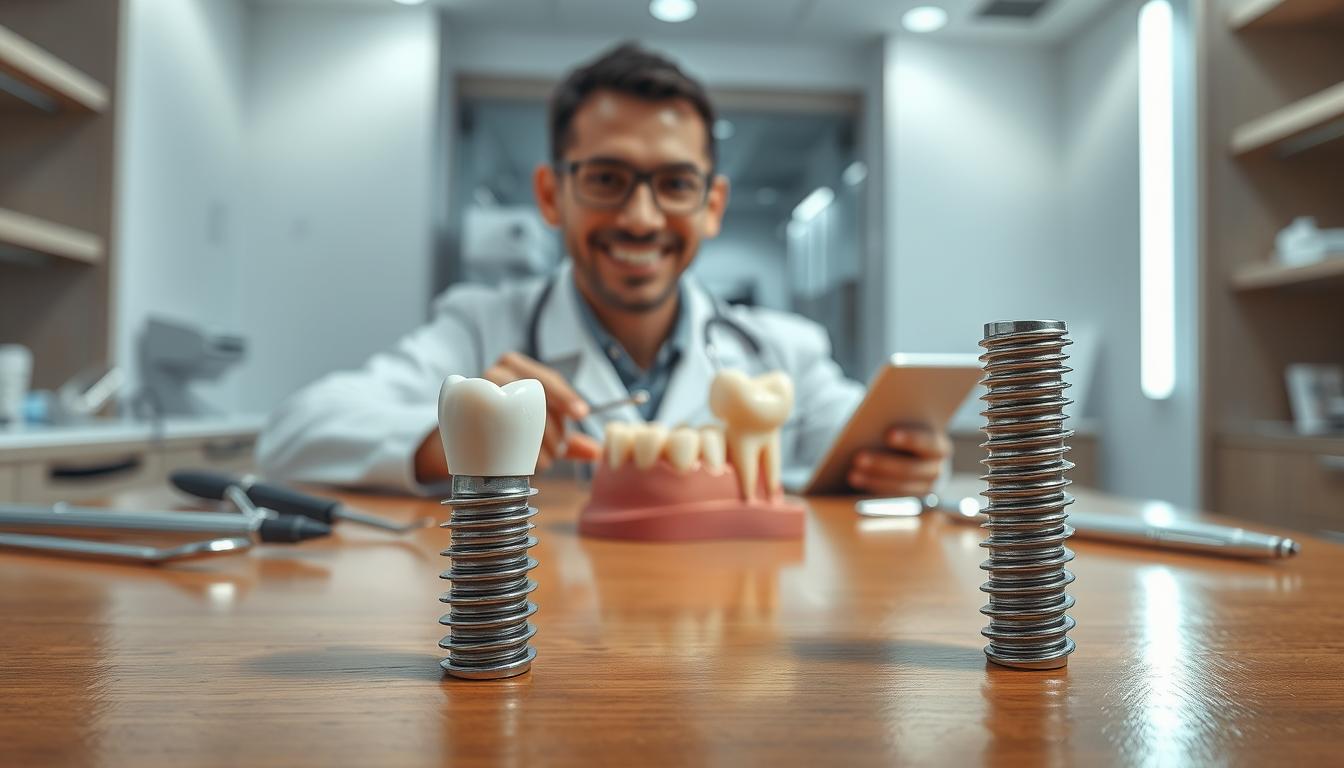
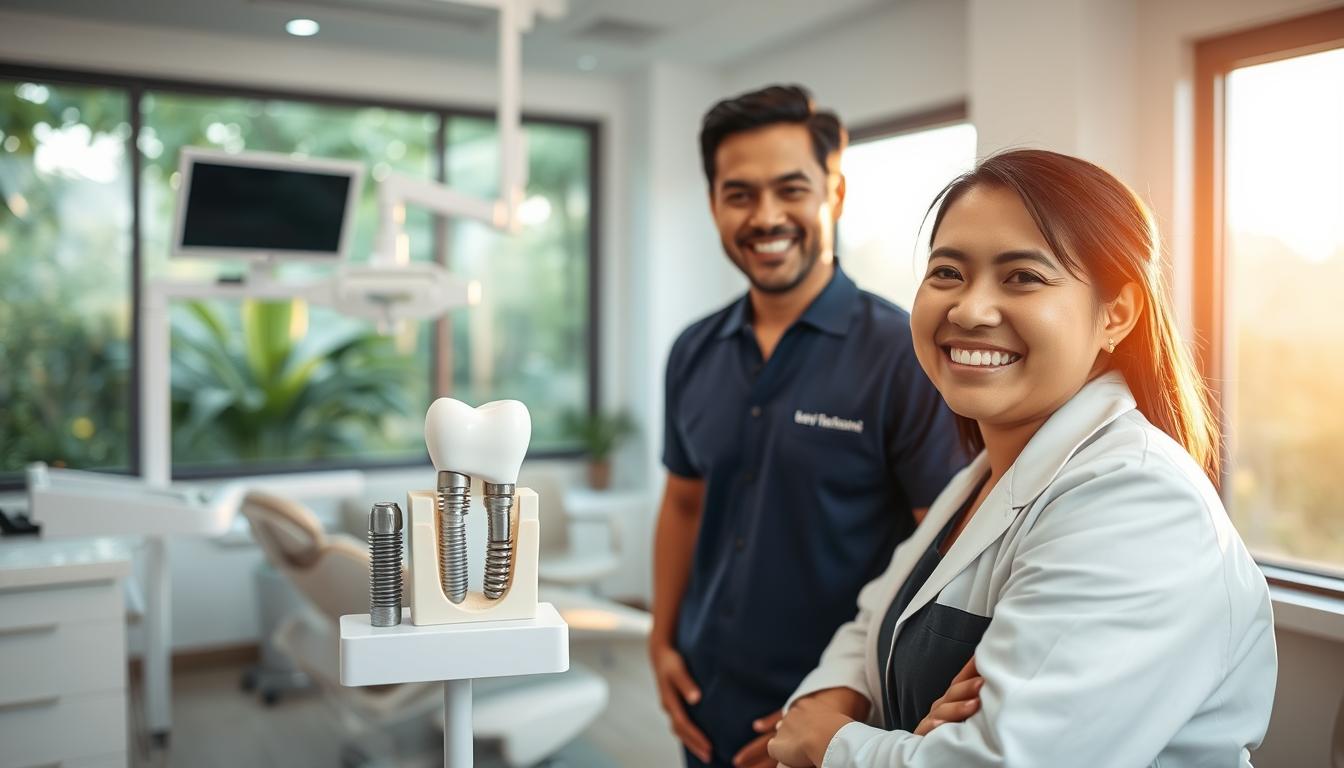
Implant, abutment, and crown: the three-part system
The implant is the titanium fixture placed into the jawbone. It serves like a tooth root and anchors the whole restoration.
The abutment connects the implant to the crown. The crown is the visible, tooth-shaped top that restores chewing and appearance.
Titanium and osseointegration with the jawbone
Titanium is biocompatible, so bone grows around it in a process called osseointegration. This fusion usually takes 6 weeks to 6 months.
With good planning and 3D imaging, implant placement is precise and minimally invasive. After the healing phase, the abutment and crown are attached and the restored tooth feels secure like a natural tooth.
We guide you through each procedure step, helping you evaluate brands, warranties, and long-term care so your new tooth lasts for years.
Dental Implants Philippines: Costs, Savings, and What’s Included
We list real price ranges so you can plan confidently for care and travel. Below are typical costs and the items most quotes include so you can compare clinics like-for-like.
Typical price examples show single titanium implant packages (implant + abutment + crown) start near $1,060. Mini implants average about $473, and same-day options are often around $1,598. Full-arch solutions run roughly $7,533 (All-on-4), $9,806 (All-on-6), or $12,079 (All-on-8) per arch.
What’s usually included: diagnostics (CBCT), implant brand, abutment type, provisional restorations, and the final crown. Additional services—bone grafting (~$600 per quadrant), sinus lifts, and extractions—are quoted separately so there are no hidden fees.
How you save: Many patients save up to ~75% compared with U.S. prices while using recognized systems and modern clinic workflows. We gather multiple quotes so you can compare brands, lab materials (zirconia vs. porcelain), and timing side-by-side.
We also itemize travel and stay packages when available, and document every inclusion so your total cost picture is clear before you book.
Types of Implant Options to Match Your Needs
Choosing the right restoration starts with understanding the main options and how they match your oral health and schedule. We help you compare candidacy, timelines, and maintenance so you can choose with confidence.
Single tooth and implant-supported bridges
A single tooth implant replaces one missing tooth without altering adjacent teeth. This preserves neighboring structure and long-term oral health.
Implant-supported bridges restore multiple teeth using fewer fixtures. They balance cost, stability, and ease of cleaning.
Full-arch solutions: All-on-4 / All-on-6 / All-on-8
Full-arch solutions anchor an entire arch to 4–8 fixtures for fast, fixed function. These options restore chewing and speech quickly and are common when many teeth are missing.
Mini and same-day options
Mini implants and same-day protocols are selective choices. They work when bone, bite forces, and primary stability meet strict criteria.
We review bone quality, esthetics, and hygiene access, plan fixture number and angulation, and outline maintenance needs so your chosen solution fits your lifestyle and travel schedule.
Are You a Candidate? Health, Bone Density, and Lifestyle Considerations
Safety guides every recommendation. We review medical history and lifestyle to see if this option suits your long-term health goals. Our approach protects outcomes and your investment.
Systemic conditions, smoking, and parafunctional habits
Surgeons may avoid placement for heavy smokers, uncontrolled diabetes, active autoimmune disorders, or blood conditions. Bruxism raises mechanical risk too.
We assess each patient’s risks and coordinate with your dentist or physician when needed. Sometimes a delay for medical control or smoking cessation improves success odds.
Bone quality, gum health, and realistic expectations
Adequate bone and healthy gums are critical for jawbone support. CBCT imaging helps us evaluate density and height precisely.
If bone is thin, grafting or a sinus lift can be recommended before or during treatment. We’ll also present other options like bridges or dentures when implants aren’t ideal now.
-
Pre-checks: medical history, diabetes control, and blood conditions.
-
Lifestyle review: smoking, bruxism, and adherence to aftercare.
-
CBCT assessment: bone and gum health inform timelines and steps.
We advocate for your safety first and match the right timing and treatment to your needs, not the fastest route.
The Dental Implant Procedure and Timeline
We map your treatment into simple milestones so you always know what’s next. Our team coordinates scheduling, travel windows, and clear timing so your care stays organized and supportive.
Consultation and diagnostics
Consultation includes a CBCT scan and digital impressions to map nerves, jawbone, and available volume. This planning step guides safe implant placement and any needed grafting.
Placement surgery and immediate post-op
Surgery is usually done under local anesthesia with comfort measures and a minimally invasive approach. Immediate post-op focuses on swelling control, hygiene, and a gentle diet for the first week.
Osseointegration: healing over months
Bone fusion takes about 6 weeks to 6 months, depending on bone quality and location. We monitor healing with scheduled check-ins and remote follow-ups.
Abutment and final crown
Once integrated, the abutment is placed and a custom crown is attached to match adjacent teeth. Most patients plan two trips: placement (and temporaries if needed) and the return visit for the definitive crown.
We walk beside you at every step—planning, scheduling, and communicating timelines—so your experience feels organized and supportive.
Supporting Procedures: Bone Grafting and Sinus Lifts
Sometimes the hard work happens before placement: grafting and sinus lifts prepare the site for success. We explain when these steps matter and give clear cost context so you can budget with confidence.
When grafting restores volume and density
Bone grafting rebuilds thin or soft bone in the jaw so an implant has a stable base. Materials and techniques vary by defect size and location to encourage strong healing.
Typical cost: grafts are often quoted around $600 per quadrant and include membranes when listed in your plan.
Sinus lift for upper back teeth with limited bone height
A sinus lift raises the sinus floor to add bone height in the upper back jaw when native bone is too shallow for reliable fixture length.
CBCT scans guide precise measurements, protecting sinus and nerve spaces during surgery and helping surgeons decide if grafting and implant placement can be combined or staged.
What we cover in your quote: graft materials, membranes, expected healing timelines, follow-up imaging, and sequencing so your travel windows stay efficient and safe.
Quality You Can Trust: Training, Standards, and Technology
Trust grows from verified credentials, modern tech, and honest communication—and we verify all three.
We confirm licenses and memberships with local regulators like the PDA and PRC so clinicians meet consistent, U.S.-aligned education standards. This helps ensure predictable procedures and safer outcomes for patients.
US-aligned education and oversight
We verify ongoing education in implant dentistry, board affiliations, and training history for each dentist we recommend. This reduces variability and supports evidence-based care.
Clinic tech: CBCT, CAD/CAM, and 3D digital impressions
Clinics with CBCT-guided planning, 3D scans, and CAD/CAM milling deliver accurate fit and faster turnarounds. Those tools help labs produce consistent crowns and restorations that match shade and function.
We also check sterilization, implant kits, and lab traceability. Clear photos, imaging, and reports are standard so your plan is documented and transferable to any dental clinic back home.
Technology plus training equals fewer surprises and a smoother experience.
Choosing a Dental Clinic in the Philippines with MedicalsWay
We help you shortlist clinics by verifying credentials and showing real patient outcomes. Our goal is to make your choice clear, safe, and tailored to the treatment you need.
Verification of licenses, affiliations, and implant brands
We confirm licenses and memberships before any clinic joins our network. That includes regulator records and professional affiliations so you know credentials are real.
Patients can compare clinics that use trusted brands like Straumann, Osstem, and BioHorizons. We list those brands in each quote so you see materials and expected success at a glance.
Reading reviews, viewing clinic photos, and virtual tours
Seeing is believing. We share contextual reviews that note case type and timelines so you can match experiences to your option.
Clinic photos and virtual tours let you inspect facilities, equipment, and staff flow remotely. We also provide itemized consultation quotes that break down implant, abutment, crown, and any grafting line-by-line.
How we support your decision: we align recommendations to single-unit, full-arch, or complex grafting needs, show dentist profiles and case examples, and coordinate consultations—virtual or in-person—so you can compare options and schedule with confidence.
What Results Can You Expect? Success Rates and Longevity
When surgery, prosthetics, and follow-up align, outcomes are strong and long‑lasting for most patients. We set honest expectations about success rates, timelines, and care so you know what to plan for.
Predictable outcomes with ~95% success rates
Well‑planned cases see about a 95% success rate. That figure depends on bone quality, systemic health, and day‑to‑day hygiene. Proper imaging and careful implant placement reduce surprises.
"Consistent follow‑up and clear documentation make future care smoother and protect long‑term results."
How long restorations last with proper care
With good hygiene and regular cleanings, many implants last 15–25 years or longer. Crowns can wear sooner and may need replacement, but the fixture in the jawbone often endures.
Healing usually takes a few months, so we schedule travel and checkups to avoid rushing the process. Maintenance—six‑month recalls, occlusal checks, and nightguards when needed—keeps your tooth and surrounding bone healthy.
The benefits of planning include tracked torque and materials notes, easier service by local dentists, and quicker responses to any inflammation or loosening. We remain available after treatment to support your health and satisfaction.
Travel Planning for Patients from the United States
Planning travel around your procedure saves stress and keeps healing on track. We simplify timelines, transfers, and lodging so your focus stays on rest and results.
Best time to visit, visas, and flight logistics
The ideal window is January–May for milder weather and easier local travel. Many U.S. travelers find flights are more reliable and connections simpler in those months.
We outline flight options, expected travel time, and arrival steps so you know what to expect at immigration and baggage claim. If you need visa guidance, we point you to current entry rules and clinic support for letters of intent.
Coordinating two trips for placement and restoration
Most patients plan two visits: Trip 1 for fixture placement and any grafting, Trip 2 after healing for the abutment and final crown.
Osseointegration often takes several months, so we help schedule each visit without compressing healing time. That protects the long‑term success of your treatment and reduces unexpected follow-ups.
Hotel proximity, transfers, and local tips
We recommend staying near your clinic to minimize travel after surgery. Many partner clinics offer airport pickups and hotel partnerships to simplify transfers.
Pack essentials: records, meds, payment methods, and comfy clothes for recovery days. We also share cultural pointers and note that English is commonly used in clinics, making day‑to‑day communication straightforward.
We create clear itineraries and contingency plans so schedule shifts or swelling don’t derail your care. That way you can focus on nutrition, rest, and healing—while we handle logistics and cost‑saving bundle options.
Aftercare: Healing, Hygiene, and Follow-ups
The hours and days after your procedure set the stage for steady recovery and long‑term results. We give clear, written instructions and check in so you feel supported during healing.
Immediate post-op care: ice, medications, and diet
Expect mild swelling and soreness. Use ice packs for the first 24–48 hours and take prescribed or OTC pain meds as advised.
Stick to soft, cool foods at first. Move to warmer, softer meals as comfort allows and avoid hard or crunchy items that stress the crown or surgical site.
Chlorhexidine use, avoiding smoking, and 6-month cleanings
Rinse gently with 0.12% chlorhexidine mouthwash for two weeks unless your clinician says otherwise. This reduces bacterial load while tissues seal.
Avoid smoking and alcohol during early healing. Both raise infection risk and can prevent bone fusion, so stopping helps implants last longer.
Return for professional cleanings every six months and maintain daily home care to protect your oral health and the longevity of the restoration.
Protecting your new smile for the long term
Keep the surgical site undisturbed. Don’t probe the area with fingers or tongue, and clean adjacent teeth carefully as tenderness fades.
Let us know right away if you have persistent pain, heavy bleeding, swelling, or the crown feels loose. We’ll guide next steps and, if needed, arrange a prompt check.
"We provide printed and digital aftercare guides and remain available for questions during recovery."
Consider a nightguard if you clench or grind. It protects the crown and fixture from excessive forces and helps your long‑term function and comfort.
Risks, Limits, and How We Mitigate Them
Diligent planning and clear screening reduce most risks so the surgery stays safe and predictable.
Common risks include infection, nerve irritation, sinus involvement in the upper jaw, and anesthesia side effects like nausea. Fusion can fail when bone is poor or systemic health isn’t optimized.
How we lower those chances: we use CBCT-based planning to map anatomy, confirm candidacy, and pick the right implant system. Sterile protocols and trusted labs limit infection risk.
We also screen medications, smoking, and bruxism so the procedure timing fits your overall health. That avoids rushing healing and reduces fusion problems.
Early action matters. Persistent pain, looseness, or swelling get prompt review and intervention so small issues don’t become major ones.
"Prevention, clear consent, and clinics with strong complication protocols make a real difference."
We guide you through informed consent, step-by-step hygiene instructions, and follow-up plans so the entire process supports your long‑term health and success.
Alternatives if Implants Aren’t the Right Fit
If timing, health, or budget rule out a dental implant, we help you find practical, long‑term solutions that restore function and confidence.
Fixed bridges replace one or more missing teeth by anchoring to adjacent crowns. They are fast and feel like a fixed tooth, but they require reshaping nearby teeth.
Resin‑retained (Maryland) bridges are less invasive. Thin metal or ceramic wings bond behind neighboring teeth and preserve more natural structure for select cases.
Removable partial dentures cover multiple spaces and are cost‑effective. You can remove them for cleaning and adjustments.
Complete dentures replace a full arch when many teeth are gone. Comfort and stability vary with anatomy and can improve with relining or attachments.
Planning and practical notes
These options may be interim steps while we improve gum and bone health for future treatment. We compare chewing comfort, esthetics, maintenance, and lifespan to help you choose wisely.
We coordinate with restorative dentists to match materials and shade so today’s solution blends with your smile and supports tomorrow’s plan.
"Our goal is one clear: find the right solution for your health, lifestyle, and budget today."
Transparent pricing and timelines are standard. We list what’s included so you can plan travel, healing, and any future procedures with confidence.
Conclusion
A restored smile starts with one clear consultation and a trusted plan.
We match you with verified clinics that use modern tech and English-speaking teams so you get U.S.-aligned care at a fraction of the cost. A single implant journey usually follows consultation, placement, healing time, then abutment and crown attachment.
The benefits include predictable outcomes, meaningful savings, and support through travel and aftercare. Thoughtful follow-up helps restorations function like natural teeth for years.
Ready to explore a solution that fits your time and budget? We’ll organize quotes, schedule consults, and guide you every step so your new smile feels reliable and lasting.
FAQ
What makes MedicalsWay a reliable partner for getting a tooth replacement in the Philippines?
We vet clinics, dentists, and hospitals using strict criteria: verified licenses, international affiliations, clinician credentials, and patient reviews. We confirm facility technology—CBCT, CAD/CAM, and 3D scanning—and check implant brand availability and sterilization standards so you get safe, affordable quality care.
How does MedicalsWay handle consultations, scheduling, and pricing transparency?
We coordinate virtual consultations with English-speaking dentists, provide clear itemized quotes that list implant parts, crowns, bone grafts, and clinic fees, and help schedule appointments and travel logistics. You’ll see estimated timelines and any staged visits, so there are no surprises.
Why do many Americans choose treatment in the Philippines over the USA?
Patients often save substantially—sometimes up to 70–75%—while receiving care from clinicians trained to international standards. Clinics offer modern equipment and English-speaking staff, plus personalized service and shorter wait times, making it an attractive option for quality and value.
What are the main parts of an implant system and how do they work?
The system has three parts: the fixture placed in the jawbone, the abutment that connects the fixture to the crown, and the custom crown that replaces the visible tooth. The metal fixture bonds with bone (osseointegration) to provide a stable base for chewing and a natural look.
What materials are used and why is titanium common?
Most fixtures are titanium or titanium alloys because they integrate well with bone and resist corrosion. Some clinics may offer zirconia options for patients with metal sensitivities. Your dentist will recommend the best material for your jaw health and cosmetic goals.
How much does a single tooth replacement typically cost and what influences the price?
Prices vary by brand, clinic, and required procedures. Factors that affect cost include the implant brand, need for bone grafting or sinus lift, abutment type, and the crown material. MedicalsWay provides itemized estimates so you can compare options and expected savings.
What implant options exist for different needs like single teeth or full-arch restorations?
Options range from single-tooth solutions and implant-supported bridges to full-arch systems such as All-on-4, All-on-6, and All-on-8. Mini and same-day implants may suit specific cases but aren’t ideal for everyone—your clinician will advise based on bone quality and long-term goals.
Am I a candidate if I have health issues or smoke?
Systemic conditions like uncontrolled diabetes, heavy smoking, or parafunctional habits (teeth grinding) can affect candidacy. Good gum health and adequate bone density are key. Many conditions can be managed or optimized before placement, and we help you find clinics that support medical clearance and pre-treatment planning.
What does the treatment timeline look like from consultation to final crown?
After imaging and planning (CBCT, digital impressions), the fixture is placed during surgery. Healing (osseointegration) can take 6 weeks to 6 months. Then the abutment is attached and a custom crown is placed. Some cases use immediate loading for temporary teeth, but timelines depend on individual healing and any grafting needed.
When is bone grafting or a sinus lift necessary?
Grafting restores lost volume when jawbone height or width is insufficient for stable placement. A sinus lift is used for upper back sites with limited vertical bone. These procedures increase long-term success and are common in rehabilitations that replace multiple teeth.
How do clinics ensure consistent quality and training?
Many Filipino dentists train with US- or UK-aligned programs and maintain memberships in international organizations. Clinics invest in continuing education, use CBCT and CAD/CAM workflows, and follow sterilization protocols to meet high standards.
How long do implants typically last with good care?
With proper oral hygiene, regular check-ups, and healthy habits, fixtures can last decades. Success rates are high—around 90–95%—when cases are planned and executed well. Crowns may need replacement over time due to wear.
What should US patients know about travel planning for treatment?
Plan for at least two trips if your case requires healing between stages, though some treatments can be completed in one stay. Consider visa rules, flight timing, and clinic location relative to hotels and transfers. We help coordinate logistics and recommend local accommodations near top clinics.
What does aftercare involve immediately after surgery and long term?
Immediately, patients follow ice, pain control, soft diet, and prescribed rinses. Avoid smoking and heavy exertion. Long term, regular cleanings, at-home hygiene, and periodic reviews protect your investment and oral health.
What are common risks and how does careful planning reduce them?
Risks include infection, implant failure to fuse with bone, and anesthesia reactions. Thorough diagnostics, experienced surgeons, proper surgical technique, and strict infection control all lower complication rates. We connect you with clinics that follow these safeguards.
If implants aren’t right for me, what alternatives exist?
Alternatives include fixed bridges, resin-retained bridges, and removable dentures. Each option has pros and cons for function, cost, and maintenance; your dentist will review which choice matches your needs and lifestyle.